From Nintendo to PS5: The Complete History of Electronic Games 🎮
Few inventions have shaped modern childhood and youth culture as profoundly as the electronic game. From the first flickering pixels of Pong in 1972 to the photorealistic worlds of PlayStation 5 and the addictive simplicity of mobile games on smartphones — the story of electronic gaming is one of the most extraordinary journeys in human creativity and technology. This is the complete story — from the very beginning to today.

🕹️ The Very Beginning — 1950s & 1960s: Games on Computers
The history of electronic games begins not in a toy shop but in a university laboratory. In 1958, physicist William Higinbotham created Tennis for Two — a simple tennis simulation displayed on an oscilloscope screen — at Brookhaven National Laboratory in New York. This is widely regarded as the world's first electronic game. In 1962, MIT student Steve Russell created Spacewar! on a PDP-1 mainframe computer — a two-player space combat game that became enormously popular on university campuses across America.
These early games were curiosities rather than products — playable only on enormous, expensive computers in research institutions. The idea that ordinary people might one day play electronic games in their homes seemed completely fantastical. But the seeds were planted.
🎯 1970s — The Arcade Era Begins: Pong Changes Everything
The year 1972 changed everything. Atari — founded by Nolan Bushnell and Ted Dabney — released Pong, a simple table tennis simulation, as an arcade machine. Its genius was its simplicity: two paddles, one ball, a score. Pong became a cultural phenomenon — the first commercially successful arcade video game in history. Bars and arcades across America installed Pong machines and queues formed to play.
The arcade era that followed was one of gaming's golden ages. Space Invaders (1978) from Japanese company Taito caused a shortage of 100-yen coins in Japan — such was its popularity. Pac-Man (1980) became perhaps the most recognisable video game character in history, spawning merchandise, cartoons, and a pop song. Donkey Kong (1981) introduced a certain jumping carpenter named Jumpman — who would soon become the most famous video game character of all time.
Atari also brought gaming into the home with the Atari 2600 (1977) — the first widely successful home video game console. For the first time, families could play games on their television sets without visiting an arcade.
🍄 1980s — Nintendo Changes the World: The Golden Age of Gaming
By 1983, the video game industry had collapsed dramatically — flooded with poor-quality games, consumers had lost faith. Then, in 1985, a Japanese playing card company called Nintendo released the Nintendo Entertainment System (NES) in North America, bundled with a game featuring that jumping carpenter — now renamed Mario.

Super Mario Bros. was a revelation — a joyful, imaginative, perfectly designed platformer that showed what video games could be. It sold 40 million copies. Nintendo had single-handedly revived the video game industry. The NES era produced some of gaming's greatest titles: The Legend of Zelda (1986), Metroid (1986), Mega Man (1987), and Contra (1987) — games that established genres and conventions that persist to this day.
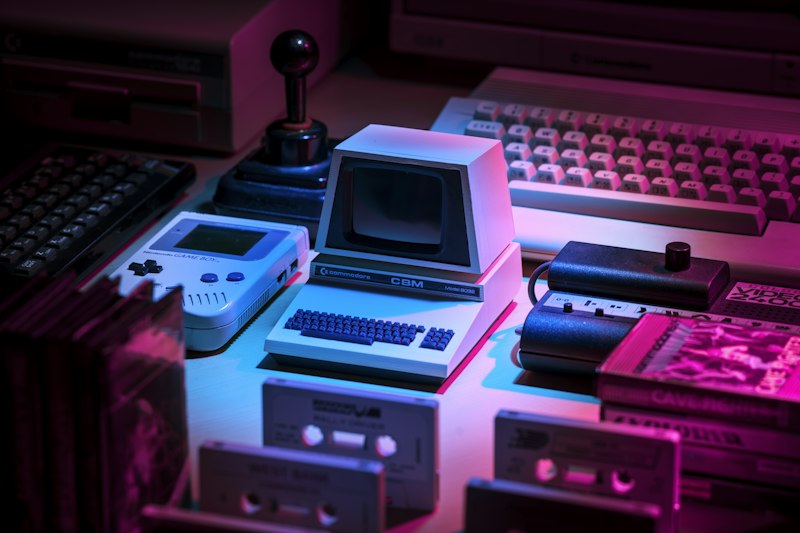
In 1989, Nintendo released the Game Boy — the world's first truly successful handheld gaming device. Battery-powered, compact, and bundled with Tetris (the most perfectly addictive puzzle game ever created), the Game Boy sold 118 million units over its lifetime. Children could now play video games anywhere — on car journeys, during school breaks, in bed with a torch. Gaming had become truly portable.
Sega emerged as Nintendo's great rival with the Sega Genesis/Mega Drive (1988/1990) and its mascot Sonic the Hedgehog (1991). The Nintendo vs Sega console war of the early 1990s was the first great console rivalry — fought in school playgrounds, on television advertisements, and in gaming magazines across the world.
💿 1990s — The PlayStation Revolution: Gaming Grows Up
The 1990s transformed gaming from a children's hobby into a mainstream cultural force. The decade began with Nintendo's Super Nintendo (SNES) — home to masterpieces like Super Mario World, The Legend of Zelda: A Link to the Past, Street Fighter II, and Donkey Kong Country.
But the defining moment of the decade came in 1994 when Sony — a consumer electronics giant with no gaming experience — released the PlayStation. Using CD-ROM technology instead of cartridges, the PlayStation could store far more data and create dramatically richer gaming experiences. Games like Final Fantasy VII (1997) told stories of cinematic depth. Gran Turismo (1997) simulated driving with unprecedented realism. Metal Gear Solid (1998) created a new genre — the stealth action game — with a narrative complexity that rivalled Hollywood films.
Nintendo responded with the Nintendo 64 (1996) and two games that redefined what was possible: Super Mario 64 — which showed how three-dimensional platforming could work brilliantly — and The Legend of Zelda: Ocarina of Time (1998), still regarded by many as the greatest video game ever made. Meanwhile, PC gaming flourished with Doom (1993), Warcraft (1994), and StarCraft (1998) establishing the real-time strategy and first-person shooter genres.
🌐 2000s — Online Gaming & The Modern Era Begins
The 2000s brought two seismic shifts: the arrival of online gaming and the emergence of gaming as a mass market entertainment form rivalling cinema and music. Sony's PlayStation 2 (2000) became the best-selling console in history — 155 million units — partly because it doubled as a DVD player at a time when DVD players were expensive. It introduced a generation to Grand Theft Auto III (2001), Shadow of the Colossus (2005), and God of War (2005).
Microsoft entered the console market with the Xbox (2001) and its killer app Halo: Combat Evolved — which demonstrated that first-person shooters could work brilliantly on consoles. The Xbox 360 (2005) and Xbox Live online gaming service transformed multiplayer gaming — suddenly players could compete with anyone in the world from their living rooms.
World of Warcraft (2004) became a cultural phenomenon — a massively multiplayer online role-playing game that at its peak had 12 million subscribers paying monthly fees to inhabit its virtual world. Gaming had become a social world in its own right.
📱 2010s — Mobile Gaming Conquers the World
The 2010s brought the most dramatic disruption in gaming history — the smartphone. Apple's App Store (2008) and Google Play created a new gaming platform accessible to billions of people who had never owned a console. Angry Birds (2009) was downloaded 4 billion times. Candy Crush Saga (2012) became the highest-grossing mobile game in history. Pokémon GO (2016) sent hundreds of millions of players into the streets, blending the physical and virtual worlds in a completely new way.
Meanwhile, Nintendo — struggling with the commercial failure of the Wii U — made its greatest creative leap with the Nintendo Switch (2017): a console that could be played on television or taken anywhere as a handheld device. The Legend of Zelda: Breath of the Wild (2017) redefined open-world gaming. Fortnite (2017) became a cultural phenomenon — a free-to-play battle royale game played by 350 million registered users, spawning its own musical concerts, film collaborations, and fashion lines.
Esports — competitive professional gaming — exploded in the 2010s. League of Legends World Championship finals drew 100 million viewers. Professional gamers became millionaires. Gaming arenas filled stadiums. The South Korean government recognised esports as an official sport.
🚀 Today — PS5, Xbox Series X & The Future of Gaming
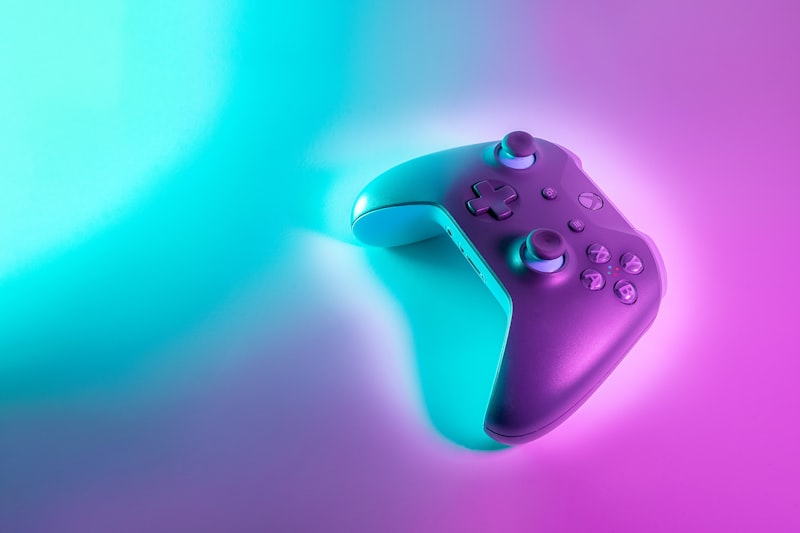
Today's gaming landscape is the richest and most diverse in the medium's history. Sony's PlayStation 5 (2020) and Microsoft's Xbox Series X (2020) deliver photorealistic graphics indistinguishable from film in some scenes. Nintendo Switch continues to innovate with titles like Tears of the Kingdom. Cloud gaming services like Xbox Game Pass and PlayStation Now allow players to stream games without expensive hardware. Virtual Reality gaming — through devices like PlayStation VR2 and Meta Quest — is creating genuinely immersive new gaming experiences.
Artificial Intelligence is beginning to transform gaming — creating non-player characters that behave with unprecedented intelligence and realism, generating game worlds procedurally, and personalising difficulty to match individual players. The next generation of games will be as different from today's as today's are from Pong.
🇮🇳 Electronic Gaming in India — An Extraordinary Growth Story
India's gaming story is one of the most dramatic in the world. For decades, India was a peripheral gaming market — consoles were expensive, games more so. The first Nintendo was a luxury. PC gaming flourished in cybercafes through the 2000s — Counter-Strike and DOTA were the games of a generation of Indian teenagers.
The smartphone revolution transformed everything. With affordable Android smartphones and cheap mobile data (thanks to Jio's 2016 launch), India became the world's largest mobile gaming market by downloads. PUBG Mobile — before its ban — was the most downloaded game in India with 50 million active users. Free Fire and BGMI (Battlegrounds Mobile India) became mainstream entertainment reaching into every small town and village.
Indian esports is now a serious industry — with organisations like S8UL, Team Soul, and GodLike Esports competing internationally. Indian mobile gamers like Scout, Mortal, and Jonathan have millions of YouTube and streaming followers. The Indian gaming industry is expected to reach $8.6 billion by 2027. From a country with almost no gaming culture 20 years ago to the world's largest mobile gaming market — India's gaming journey is nothing short of extraordinary.
🎮 Gaming Milestones Timeline
From a simple bouncing ball on an oscilloscope screen in 1958 to photorealistic virtual worlds played by 3 billion people today — electronic gaming has become the world's largest entertainment industry, bigger than cinema and music combined. And the greatest chapters are still to be written. 🎮🚀